Introduction: The Foundation of Life
Reproduction represents the cornerstone of life’s continuity, and at its heart lies the precise transmission of genetic material. The accuracy of chromosomal inheritance—how chromosomes pass perfectly from parents to offspring—determines reproductive success and offspring health. A groundbreaking study published in Nature has now revealed the core mechanism ensuring this flawless genetic handover during reproductive cell development.
The Precision of Chromosomal Inheritance Theory
Every cell in our body contains 23 chromosome pairs, with equal contributions from both parents. During the formation of reproductive cells (sperm and egg), these paired homologous chromosomes undergo a special division process called meiosis, central to which is “crossing over.”
In this delicate dance, homologous chromosomes align, matching DNA strands exchange segments and intertwine, forming structures called “Holliday junctions.” These junctions are subsequently resolved, creating crossover points that serve two vital functions: they generate unique genetic combinations in offspring, and they form physical connections that act as anchors, guiding chromosomes to separate correctly during cell division.
This process lies at the core of chromosomal inheritance theory, ensuring each sperm or egg receives one complete, unique set of chromosomes.
When Chromosomal Inheritance Fails: Consequences and Gender Differences
When this process falters, eggs or sperm may contain incorrect chromosome numbers, potentially leading to infertility, miscarriage, or children with genetic disorders. This accuracy is particularly crucial for females, as egg cells form crossovers during fetal development and must maintain these connections until ovulation decades later.
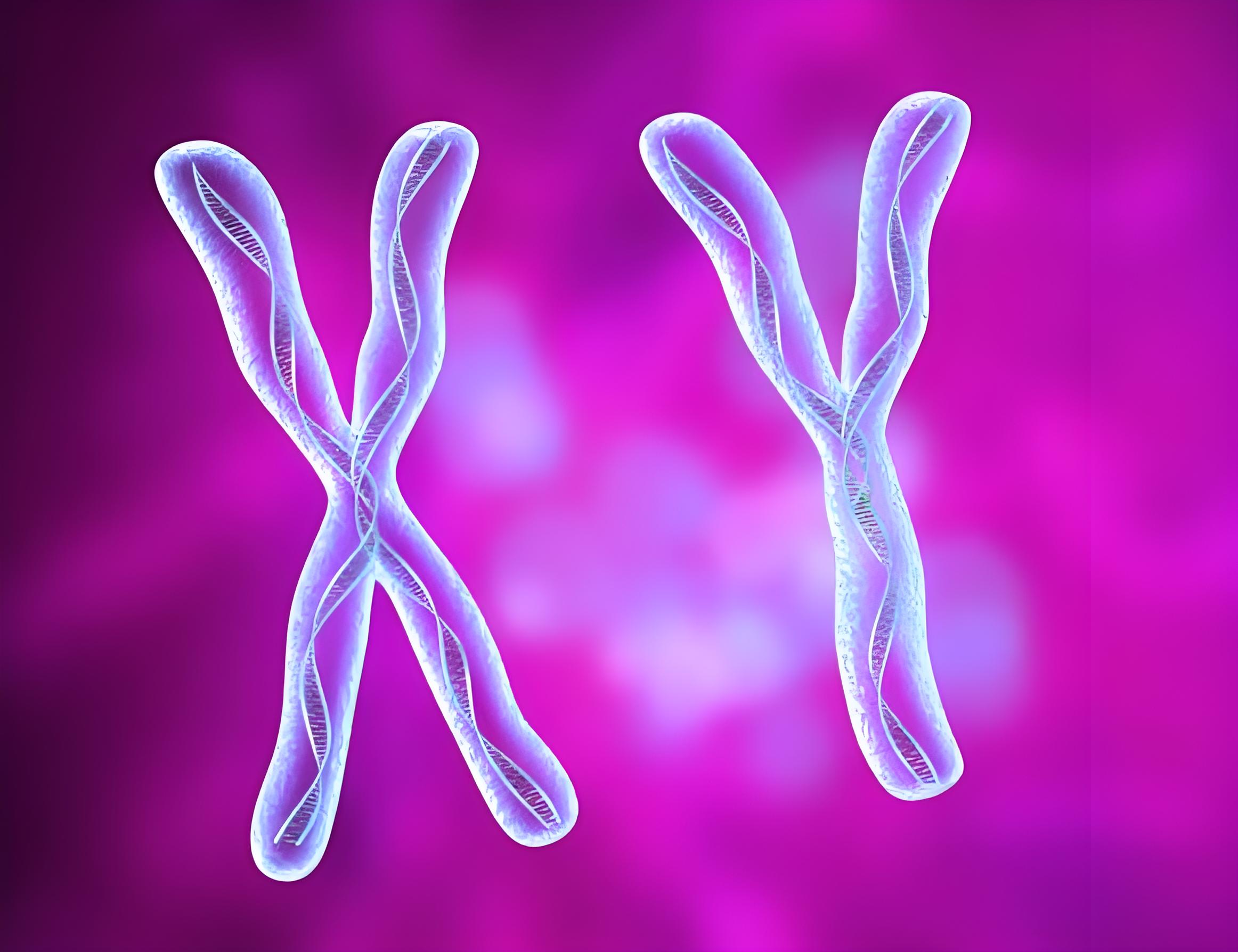
Understanding these mechanisms helps explain various chromosomal inheritance patterns, including the distinct Y chromosome inheritance pattern (passed directly from father to son) and the X chromosome inheritance pattern (which can be inherited through both parental lines). The stability of crossover formation directly impacts how these sex chromosomes are transmitted.
Revealing the Guardians of Genetic Fidelity
To unravel this regulation, researchers turned to budding yeast, explaining: “The chromosome structures we study have remained virtually unchanged through evolution. Every protein we observe in yeast has a direct counterpart in humans.”
Using “real-time genetics,” the team engineered cells to degrade specific proteins at recombination connection sites. By observing the fates of these junctions after removing key proteins, they mapped the complete protein network ensuring successful crossover formation.
The Guardian Mechanism: Cohesin’s Crucial Role
Their analysis revealed that cohesin plays a pivotal guardian role, preventing an enzyme from prematurely dismantling unfinished chromosome connection structures.
“They protect the Holliday junctions,” said Professor Neil Hunter, the paper’s senior author. This protection ensures chromosome crossovers form stably, laying the foundation for accurate chromosome separation.
Implications for Understanding Inheritance Patterns
This fundamental research, conducted over many years, holds profound significance for human reproductive health. Since the recombination mechanism is evolutionarily conserved, the guardian system discovered in yeast—centered around cohesin—likely operates identically in humans.
This means dysfunction in any key protein within this mechanism could underlie human fertility disorders, miscarriage, or genetic conditions like Down syndrome. The research provides new insights into the chromosomal inheritance theory, particularly regarding how specific patterns like the Y chromosome inheritance pattern and X chromosome inheritance pattern are maintained across generations.
Future work building on this discovery will deepen our understanding of reproductive disorders and may provide the scientific foundation for new diagnostic and therapeutic approaches, ultimately helping ensure the flawless transmission of life’s blueprint.